


Table of Content
Causes of hearing lossSymptoms of severe hearing lossWhat is cochlear implant surgery?Who are the candidates for the procedure?How is the condition diagnosed?Steps of cochlear implant surgeryHow long does the cochlear implant surgery take?Types of internationally approved cochlear implant devicesSuccess rate of cochlear implant surgery in EgyptCost of cochlear implant surgery in Egypt in 2026Why do Saudi patients choose Egypt?Cochlear implant packages with accommodationAuditory rehabilitation after surgeryBook your consultation
Cochlear Implant Surgery
We work hard to create an exceptional experience for you during your treatment in Egypt. When you book through our website, you will receive a distinguished medical service inside Egypt. In your medical journey, we will provide you with tourism and entertainment services as well.
Cochlear Implant Surgery
Hearing is one of the most important senses that humans rely on for communication, learning, and interaction with the world around them. When hearing loss is severe, the patient—whether a child or an adult—may face significant difficulties in understanding speech or developing communication skills normally. Therefore, early diagnosis and seeking appropriate treatment become crucial.
In recent years, many patients from Saudi Arabia and the Gulf countries have started seeking effective treatment options abroad, especially for conditions requiring advanced medical intervention, such as cochlear implantation. Egypt stands out as a significant destination offering high-quality medical expertise and competitive costs compared to other countries.
To better understand the need for treatment, it is important first to identify the causes and symptoms of hearing loss and to learn about advanced medical solutions, such as cochlear implant surgery in Egypt.
Causes of hearing loss
Hearing loss can occur for multiple reasons, which may vary from one person to another depending on age, health condition, and medical history. In many cases, severe hearing loss makes traditional hearing aids ineffective, leading doctors to consider more advanced solutions, such as cochlear implants. Some of the most prominent causes of hearing loss include:
1. Auditory nerve weakness: A significant cause of hearing loss is damage to the auditory nerve, which transmits sound signals from the ear to the brain and may not function normally. It may be congenital or occur later due to injury or disease.
2. Genetic factors: Genetic factors play a significant role in some cases of hearing loss, especially in children. In certain families, hearing impairment is inherited, leading to an early hearing problem.
3. Ear infections: Recurrent ear infections are a common cause of hearing loss, especially in children. In some cases, these infections can damage the parts of the ear responsible for transmitting sound, leading to gradual hearing deterioration.
4. Hearing loss after fever or infection: Certain illnesses or severe infections, such as high fever or viral and bacterial infections, can cause hearing loss. In some cases, these illnesses may affect the auditory nerve or the cochlea inside the ear.
When hearing loss reaches an advanced stage, hearing aids may no longer be sufficient to improve hearing. At this point, many patients begin to seek more effective solutions, such as advanced technologies like cochlear implant surgery, which are available in Egypt for Saudi patients.
Symptoms of severe hearing loss
Some patients may not notice their hearing loss in its early stages, but symptoms become more apparent over time. Early recognition helps in timely diagnosis and treatment. The most important symptoms of severe hearing loss include:
• Difficulty understanding speech during conversations
• Needing to increase the volume of the TV or phone more than usual
• Difficulty following conversations in crowded places
• Frequently asking others to repeat what they said
• Inability to hear soft or distant sounds
In children, symptoms may appear differently, such as:
• Not responding to surrounding sounds
• Delay in speech or language development
• Not turning when called by name
• Difficulty interacting with sounds or music
When these symptoms are noticed, it is important to consult a hearing specialist for proper evaluation. In cases where traditional hearing aids are no longer effective, doctors may recommend an advanced medical solution that can significantly improve hearing ability: cochlear implant surgery.
What is cochlear implant surgery?
Cochlear implant surgery is an advanced procedure designed to help individuals with severe to profound hearing loss who do not benefit adequately from hearing aids. During the procedure, a small electronic device is implanted in the ear to directly stimulate the auditory nerve and to send sound signals to the brain, allowing the patient to perceive sounds differently from normal hearing but effectively improving communication.
A cochlear implant typically consists of two main parts:
• An internal component that is surgically implanted inside the ear
• An external component placed behind the ear, which captures sound and converts it into electrical signals
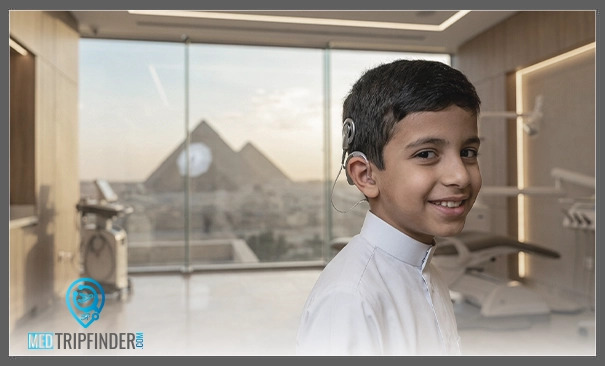
Cochlear implant surgery in Egypt is considered one of the advanced procedures performed in many specialized medical centers, where modern devices and strong medical expertise are available. Cochlear implantation for children in Egypt has also become a common procedure, helping children born with severe hearing loss to develop hearing and speech skills at an early age—especially when performed at the right time.
Many parents ask: Is cochlear implant surgery dangerous for children?
In fact, the procedure is generally very safe when performed by a specialized medical team under strict medical standards. Furthermore, modern surgical techniques have significantly reduced risks, making it an effective treatment option for many cases.
Who are the candidates for the procedure?
Not all cases of hearing loss require a cochlear implant, as some patients can benefit from conventional hearing aids. However, in other cases, cochlear implantation is the best way to improve hearing and communication. The main groups who may be candidates for the procedure include:
• Children with severe hearing loss:
Children born with severe or profound hearing loss may face significant challenges in communicating and learning speech. In such cases, cochlear implantation can enhance hearing ability and support language and speech development.
• Adults who do not benefit from hearing aids:
Some adults experience gradual or sudden hearing loss due to illness or injury, and hearing aids may not provide sufficient improvement. In these cases, doctors may recommend cochlear implantation as an effective solution.
• Patients with profound hearing loss in one or both ears:
In some cases, hearing loss is so severe that the ear cannot transmit sound to the brain normally. A cochlear implant can bypass the damaged parts of the ear and directly stimulate the auditory nerve.
The patient’s suitability for the procedure is determined through a comprehensive medical evaluation, including hearing tests, imaging, and specialized clinical assessment.
How is the condition diagnosed?
Before deciding on cochlear implant surgery, the patient undergoes several precise medical evaluations to ensure it is the most appropriate solution. The goal of the diagnosis is to determine the degree of hearing loss, assess the benefit from hearing aids, and evaluate the condition of the ear and auditory nerve.
The diagnostic process includes:
1. Hearing tests:
These are the first steps in evaluating the patient’s condition and include specialized tests to measure how well the ear detects sounds across different frequencies, such as:
• Audiometry (hearing test)
• Auditory Brainstem Response (ABR) test
• Speech and sound discrimination tests
These tests help determine whether the hearing loss is severe or profound and whether hearing aids are effective.
2. Medical imaging:
After hearing tests, the doctor may request imaging studies, such as:
• CT scan of the inner ear
• MRI scan
These scans help evaluate the cochlea and auditory nerve and ensure there are no structural issues that could affect the success of the surgery.
3. Specialist evaluation:
After all tests and imaging, a specialized ear surgeon evaluates the case comprehensively. This includes determining whether the patient is a suitable candidate and explaining the procedure and post-surgery expectations.
This evaluation also helps select the best cochlear implant surgeon and the most suitable medical center in Egypt that is equipped with advanced technology and expertise.
Steps of cochlear implant surgery
Cochlear implantation is a delicate ear surgery, but it has become relatively common due to advancements in medical technology and surgical expertise. The procedure is performed in an operating room under the supervision of a specialized medical team. The steps involved in cochlear implantation include:
1. Anesthesia: The patient is placed under general anesthesia to ensure no pain during the procedure.
2. Small surgical incision: The surgeon makes a small incision behind the ear to access the bone behind the cochlea.
3. Implanting the internal device: The internal electronic part of the implanted cochlear implant is fixed inside the bone behind the ear, and the electrodes are inserted inside the cochlea.
4. Closing the incision: After ensuring that the device is properly placed, the incision is carefully closed.
How long does the cochlear implant surgery take?
In most cases, cochlear implant surgery takes between two and four hours, depending on the patient's condition and the specifics of the procedure. Patients are usually able to leave the hospital within one or two days of the surgery, with follow-up medical care to ensure a smooth recovery.
After a few weeks, the external component of the device is fitted behind the ear, which works by receiving sounds and converting them into electrical signals that are transmitted to the auditory nerve.
Types of internationally approved cochlear implant devices
Cochlear implantation relies on advanced medical devices manufactured by leading global companies specializing in hearing technologies. These devices are known for their high quality and effectiveness in improving sound perception.
Some of the most recognized cochlear implant brands include:
Some of the most recognized cochlear implant brands include:
| Company | country | Features |
| Cochlear | Australia | High accuracy in audio transmission Advanced software support |
| MED-EL | Austria | Suitable for children Great flexibility in electrode design |
| Advanced Bionics | US | Powerful sound quality Advanced audio processing technologies |
How is the type of cochlear implant selected?
The selection of a cochlear implant is not random; it depends on several medical and technical factors determined after a thorough evaluation of the patient’s condition. Among the most important factors influencing the selection of the appropriate device are:
• The patient’s age, especially in cochlear implantation for children
• The degree of hearing loss and the ear’s response to sound
• The shape and structure of the cochlea in the inner ear
• The specialist’s recommendation according to medical expertise
Choosing the appropriate device helps achieve the best possible outcomes after surgery and improves the patient’s ability to understand sounds and speech.
Does the cost vary depending on the device type?
Yes, the cost of cochlear implant surgery can vary depending on the type of device used. Each manufacturer offers different technologies and levels of sound processing, which may affect the final cost. Factors that may influence the cost include:
• The device manufacturer
• The technologies integrated into the sound processor
• Associated medical services, such as diagnostics, surgery, and follow-up care
However, the cost of cochlear implantation in Egypt remains significantly lower compared to many other countries, while offering the same globally approved devices used in advanced medical centers.
Success rate of cochlear implant surgery in Egypt
Cochlear implantation is an advanced medical procedure that has achieved high success rates worldwide, including in Egypt. With significant advancements in surgical techniques and modern implant devices, this procedure offers many patients a real opportunity to regain hearing ability and improve communication.
Medical estimates indicate that the success rate of cochlear implant surgery in Egypt is very high, especially when performed in specialized centers by experienced surgeons. Success largely depends on several factors, including:
• Accurate preoperative diagnosis
• The experience of the medical team
• The type of cochlear implant device used
• The patient’s commitment to post-surgical auditory rehabilitation
Many cases have shown significant improvement in hearing and speech comprehension, particularly in children who undergo the procedure at an early age.
When does hearing improve after cochlear implantation?
Many patients and parents ask: When does hearing improve after cochlear implantation?
In reality, improvement does not occur immediately after surgery. Patients usually wait several weeks for healing before the external device is fitted and activated.
Once activated, the patient begins to hear sounds for the first time through the implant. However, the brain needs time to adapt to these new sound signals. Therefore, hearing improvement occurs gradually over time and becomes more noticeable with consistent auditory rehabilitation and speech training.
In many cases, children show remarkable progress in hearing and speech development in the months following the procedure, especially when surgery is combined with appropriate rehabilitation programs.
Cost of cochlear implant surgery in Egypt in 2026
When considering cochlear implant surgery, cost is a major concern for patients, especially those coming from abroad. Therefore, many patients from Saudi Arabia and the Gulf countries seek a treatment option that combines high-quality medical care with affordable pricing.
The cost of cochlear implant surgery in Egypt is among the most competitive compared to many other countries, as medical centers in Egypt offer the same internationally approved devices, respectable medical expertise, and relatively lower costs. The price of cochlear implant surgery in Cairo varies from center to center, depending on several factors, including:
• The type of cochlear implant used.
• The surgeon's expertise and the medical center.
• Pre-operative medical examinations.
• Hospital and accommodation costs.
• Follow-up services after surgery.
In general, the cost in Egypt is significantly lower than in many other countries, making it a suitable option for families seeking effective treatment at a reasonable cost.
Cost comparison: Egypt vs. Saudi Arabia
To help patients better understand the difference, the average cost of the procedure can be compared approximately between Egypt and Saudi Arabia:
| Country | Average cost |
| Egypt | Significantly lower prices while offering the same global device quality. |
| Saudi Arabia | Relatively higher cost due to hospital and medical service expenses |
How much does cochlear implant surgery cost outside of Saudi Arabia?
Many patients ask this question when considering treatment abroad. In reality, prices vary from one country to another, but many patients from Saudi Arabia and the Gulf region choose Egypt because it offers:
• Lower cost compared to some other countries
• Availability of globally approved cochlear implant devices
• Strong medical expertise in ear surgeries and cochlear implantation
• Ease of travel and proximity
For these reasons, Egypt has become one of the key destinations for medical tourism in hearing loss treatment and cochlear implantation for patients from the Gulf.
Why do Saudi patients choose Egypt?
In recent years, Egypt has become a leading destination for medical tourism among patients from Saudi Arabia and the Gulf countries, especially in ear surgeries and hearing loss treatment.
Many patients look for the best place that combines medical expertise with reasonable cost, making Egypt a preferred choice.
What is the best country for cochlear implantation?
While there are several advanced countries in this field, Egypt stands out for several reasons:
1. Specialized medical expertise: Egypt has highly experienced surgeons specializing in ear surgeries and cochlear implantation. Many medical centers in Cairo and other cities use the latest technologies and globally approved devices.
2. Lower cost compared to other countries: One of the main reasons patients choose Egypt is its affordable cost compared to other countries. Despite using the same internationally approved equipment, the cost of the procedure in Egypt remains significantly lower, making it a suitable and economical option for many families.
3. Ease of travel and proximity: Egypt is easily accessible from Saudi Arabia and Gulf countries, with frequent direct flights. The shared language and cultural similarities also make the treatment experience more comfortable for patients and their families.
For these reasons, hearing loss treatment in Egypt has become a popular option for Saudi patients seeking effective care and a comfortable medical experience.
Cochlear implant packages with accommodation
When traveling abroad for treatment, patients often look for a provider that can manage all medical and logistical details. This is where medical tourism packages become important, offering a complete treatment experience.
MedTripFinder, a medical tourism platform in Egypt, provides comprehensive services for patients coming from Saudi Arabia and the Gulf, allowing them to focus on treatment without worrying about arrangements.
Cochlear implant packages with accommodation typically include:
1. Airport pickup: The patient or family will be met immediately upon arrival at the airport, and a comfortable means of transportation will be provided to the accommodation or medical center.
2. Hotel accommodation: The treatment programs provide comfortable hotel accommodation options near the hospital or treatment center, making it easier to attend medical appointments without the hassle of commuting.
3. Medical follow-up: The packages also include medical follow-up before and after the procedure, to ensure proper care throughout the treatment period in Egypt.
These services help make the treatment experience more organized and comfortable for international patients.
Auditory rehabilitation after surgery
The treatment journey for cochlear implantation does not end with surgery. Postoperative auditory rehabilitation plays a crucial role in achieving the best outcomes.
After the device is activated, the patient requires training and rehabilitation so that the brain can learn how to interpret the new sounds it receives from the device. Rehabilitation programs typically include:
• Auditory training sessions to help recognize different sounds
• Exercises to improve speech understanding
• Specialized training to develop communication skills
This stage is especially important for children, as it helps them gradually develop hearing and speech skills after surgery.
With proper commitment to the rehabilitation program, many patients achieve significant improvement in hearing and communication.
Book your consultation
If you or a family member suffers from severe hearing loss and hearing aids are not providing the desired results, a cochlear implantation procedure may be an important step toward improving quality of life and communication.
Through the MedTripFinder medical tourism platform in Egypt, you can receive full support in organizing your treatment journey—from initial consultation to post-surgery follow-up. Services include:
• Booking cochlear implant surgery in Cairo after medical evaluation
• Connecting with the best cochlear implant centers in Egypt
• Accessing accurate information about the cost and the appropriate treatment plan.
Take the first step today toward better hearing and communication by booking your consultation now to explore the best treatment options for your condition.
Public FAQs
Hearing aids work by amplifying sound so the ear can hear it more clearly. They are suitable for cases of mild to moderate hearing loss.
A cochlear implant, on the other hand, is an advanced electronic device that is surgically implanted inside the ear. It directly stimulates the auditory nerve and sends sound signals to the brain. This solution is typically used in severe or profound hearing loss that does not benefit sufficiently from hearing aids.
Cochlear implant surgery can be performed in both children and adults with severe hearing loss who do not benefit from hearing aids. However, the procedure often achieves better results in children treated at an early age, as the brain is more capable of learning sounds and developing hearing and speech skills.
There is no single type that can be considered the best for all cases, as the choice of a cochlear implant type depends on several factors, such as:
• The child’s age
• The degree of hearing loss
• The structure of the cochlea in the inner ear
• The specialist doctor’s recommendation
Devices produced by global companies, such as Cochlear, MED-EL, and Advanced Bionics, are among the most commonly used in cochlear implant centers worldwide.
In general, cochlear implant surgery is considered safe when performed in a specialized medical center by an experienced ear surgeon. However, there may be some minor risks as with any surgical procedure, but they are relatively rare. Advances in medical technology have significantly improved the safety and success of the procedure.
The cochlear implant surgery usually takes approximately 2 to 4 hours in the operating room. Most patients can leave the hospital within one or two days after surgery, with medical follow-up to ensure proper recovery.
The child does not start hearing immediately after surgery. The device is usually activated a few weeks after the procedure, once the surgical site has healed. After activation, the child gradually begins to hear sounds and requires auditory rehabilitation sessions to help understand sounds and speech more effectively.
In most cases, cochlear implant results are long-lasting. The device can help patients hear sounds and communicate effectively for many years. However, keeping these positive results depends on several factors, such as commitment to auditory rehabilitation and regular medical follow-up.
Yes, patients from Saudi Arabia and the Gulf countries can easily undergo cochlear implant surgery in Egypt. Many medical centers offer the necessary expertise and internationally approved devices. Additionally, some medical tourism companies provide comprehensive services, including appointment scheduling, accommodation, and follow-up care throughout the treatment period.
The cost of cochlear implant surgery in Egypt varies depending on the type of device used, the doctor’s experience, and the medical center where the procedure is performed. However, the cost in Egypt is lower compared to many other countries, making it a suitable option for patients from Saudi Arabia and the Gulf region seeking high-quality treatment at a reasonable price.