


Table of Content
Partial nephrectomy When is it necessary?How is the robotic partial nephrectomy performed?Advantages of robotic kidney tumor removalPossible complications of robotic kidney tumor surgerySuccess rate of robotic kidney tumor surgeryWhat are the steps of robotic kidney tumor removal?How long does a robotic kidney tumor surgery take?What happens after kidney tumor removal?How long does the pain last after a robotic kidney surgery?Symptoms following robotic kidney tumor surgeryPostoperative tips after partial nephrectomyDiet after partial nephrectomyCost of robotic partial nephrectomyConclusion
Robotic Partial Nephrectomy
We work hard to create an exceptional experience for you during your treatment in Egypt. When you book through our website, you will receive a distinguished medical service inside Egypt. In your medical journey, we will provide you with tourism and entertainment services as well.
Robotic Partial Nephrectomy
Kidney tumors have become less frightening for many patients thanks to advancements in urological surgery, particularly with the introduction of robotic surgery. In the past, kidney tumors often meant complete removal of the kidney and the loss of life. Now, with advanced robotic surgery, it's possible to remove only the tumors and preserve healthy cells, especially in small tumors (less than 4 cm), thus maintaining kidney function.
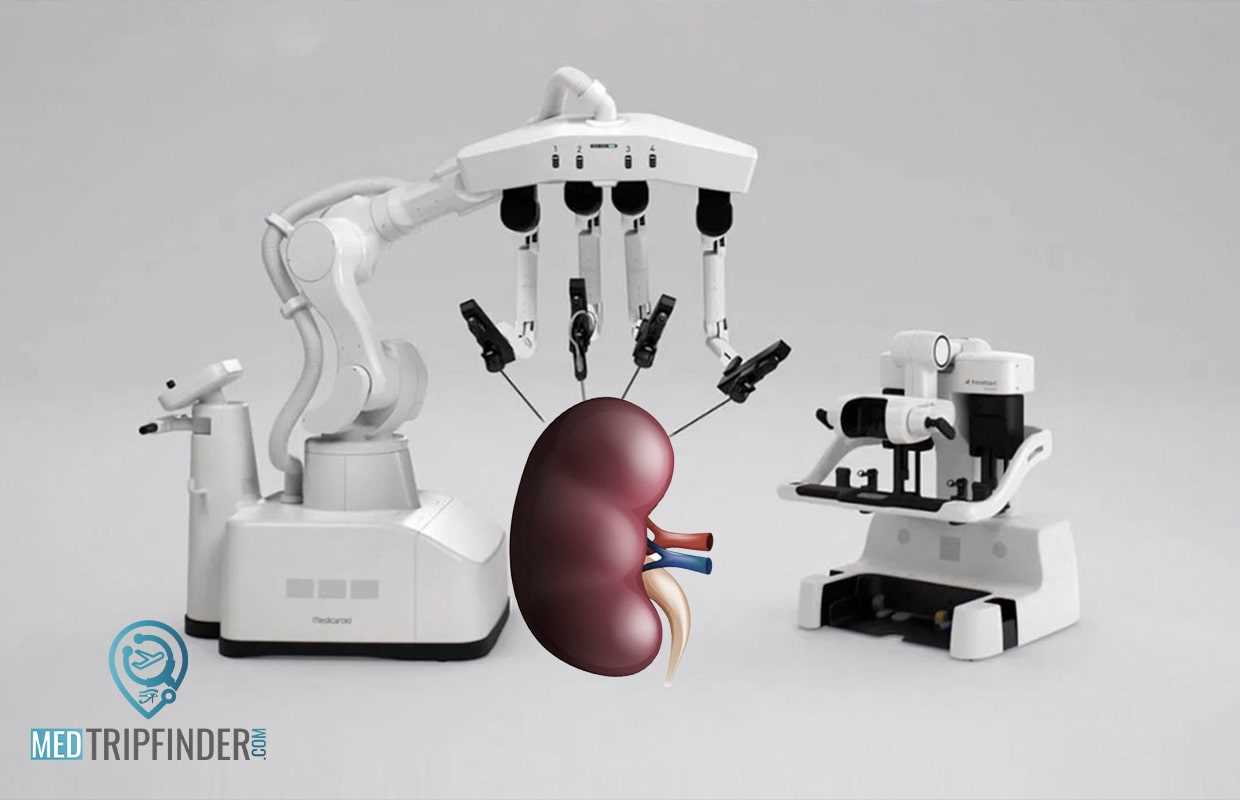
Robotic-assisted kidney tumor removal is one of the latest innovations in kidney surgery, allowing highly precise tumor excision.
Partial nephrectomy: When is it necessary?
Partial nephrectomy is recommended in the following cases:
• Presence of a small kidney tumor (less than 4 cm) that can be removed without removing the entire kidney.
• The need to preserve kidney function, particularly in patients with problems in the other kidney.
• To avoid the need for dialysis or kidney transplantation in the future.
Therefore, partial nephrectomy is considered the best option for patients with small kidney tumors who wish to maintain normal kidney function.
How is the robotic partial nephrectomy performed?
• The surgeon controls an advanced surgical robot through a control unit equipped with a high-definition, three-dimensional screen.
• Surgical instruments are inserted through very small abdominal incisions, which minimizes blood loss and impact on healthy tissue.
• After tumor removal, the kidney is carefully reconstructed and the incisions are sutured precisely, ensuring faster recovery.
This technique enables precise tumor removal while preserving as much kidney function as possible.
Advantages of robotic kidney tumor removal:
Compared to traditional surgery, robotic-assisted kidney tumor removal offers several benefits, including:
• Greater precision in tumor removal: The surgical robot reduces the risk of damage to surrounding healthy tissue.
• Less pain and shorter recovery time: Small incisions result in reduced postoperative pain and faster healing.
• Lower risk of bleeding: Robotic surgery provides more precise control of blood vessels; thus, reducing blood loss.
• Better cosmetic results: Smaller incisions lead to less visible scarring compared to conventional surgery.
Overall, this advanced technique provides safe and effective outcomes with minimal complications.
Possible complications of robotic kidney tumor surgery:
Despite its many advantages, some rare complications may occur, such as:
• Internal bleeding: Less common than in traditional surgery.
• Blood clots: Surgery may slightly increase the risk of blood clots, particularly in the legs.
• Injury to nearby structures: In rare cases, blood vessels or the ureter may be affected, though robotic surgery significantly reduces this risk.
• Urine leakage from the kidney: Rare and usually easy to treat.
The overall complication rate with robotic surgery is much lower than with traditional surgery, but postoperative follow-up is essential to prevent or manage any potential issues.
Success rate of robotic kidney tumor surgery:
The success rate of robotic-assisted kidney tumor removal is very high, ranging from 90% to 98%, especially when the tumor is detected early and has not spread beyond the kidney. Therefore, robotic surgery is considered one of the most effective treatments for kidney tumors, offering excellent outcomes while preserving kidney function.
What are the steps of robotic kidney tumor removal?
Robotic surgery is performed through several main steps:
1. General anesthesia is administered to the patient.
2. Very small incisions are made in the abdomen to insert the surgical instruments.
3. The surgical robot is used to control the instruments with extreme precision.
4. The tumor is removed from the kidney while preserving the healthy tissue.
5. The incision is closed, and necessary tests are performed to ensure there is no urine leakage.
6. The patient is transferred to the recovery room and then closely monitored during the first days after surgery.
How long does a robotic kidney tumor surgery take?
The procedure usually takes 2 to 4 hours, depending on the size of the tumor and the patient’s condition. After surgery, the patient typically stays in the hospital for 1 to 3 days, depending on overall health, and can return to normal activities within 2 to 4 weeks.
Although the surgery itself may seem lengthy, the recovery period is much shorter compared to traditional surgery.
What happens after kidney tumor removal?
After robotic kidney tumor removal, the patient enters a recovery phase that requires close medical follow-up and adherence to health instructions to ensure the best results. It is normal to experience some pain and fatigue after surgery, but the condition gradually improves over time. Recovery depends on several factors, such as the patient’s general health, the type of tumor, and the body’s response to surgery.
Hospital stay after surgery:
• The patient usually remains in the hospital for 1 to 3 days, depending on his health condition.
• Kidney function is monitored to ensure there are no complications such as bleeding or urine leakage.
• The urinary catheter is typically removed 24–48 hours after surgery, depending on the patient’s condition.
Recovery after kidney tumor removal is gradual, and it is important to follow medical instructions to return to normal life as quickly as possible.
How long does the pain last after a robotic kidney surgery?
Post-operative pain varies from person to person, but thanks to robotic surgery, pain is significantly less than with traditional surgery and usually resolves within a few weeks.
In the first days after surgery:
• The patient may feel mild to moderate pain at the surgical site, which is controlled with painkillers.
• Abdominal bloating is common due to the gases used during robotic surgery.
After one week to one month:
• Pain gradually decreases, and the patient can resume light daily activities.
• Some discomfort may persist when sitting or sleeping in certain positions.
After one to three months:
• Pain disappears completely in most patients.
• The patient regains full energy and can return to normal life.
Symptoms following robotic kidney tumor surgery:
After surgery, the patient may experience some normal symptoms, including:
• Fatigue and tiredness: Due to anesthesia and surgery, usually improving within a few days.
• Mild swelling at the surgical site: Gradually resolves within two to three weeks.
• Mild pain during urination: Especially if the tumor was removed near the ureter.
• Digestive disturbances: Such as gas or constipation, often due to pain medications or reduced movement.
However, certain symptoms require immediate medical attention, such as:
• High fever (body temperature above 38°C).
• Severe bleeding or abnormal discharge from the wound.
• Severe pain that does not improve with medication.
• Difficulty urinating or sudden swelling of the legs.
Postoperative tips after partial nephrectomy:
To ensure fast recovery and avoid complications, it is recommended to:
• Get adequate rest: Avoid strenuous activity during the first weeks after surgery.
• Walk daily: Helps improve blood circulation and reduce the risk of blood clots.
• Take medications regularly: Including painkillers and antibiotics as prescribed.
• Drink plenty of water: To maintain the health of the remaining kidney tissue and promote regular urination.
• Follow up with your doctor: For necessary tests to ensure proper kidney healing.
• Avoid smoking and alcohol: As they may negatively affect wound healing and kidney function.
Diet after partial nephrectomy:
A healthy diet plays an important role in supporting the function of the remaining kidney tissue and speeding up recovery.
Recommended foods include:
Recommended foods include:
• Fresh vegetables and fruits: To support the immune system and promote overall health.
• Healthy proteins: Such as fish, chicken, and eggs, while limiting large amounts of red meat.
• Whole grains: Such as oats and brown rice to maintain balanced energy levels.
• Plenty of water: Approximately 2–3 liters per day to help the kidneys eliminate toxins.
Foods to avoid include:
• Salty foods: As they increase pressure on the kidneys.
• Soft drinks and excessive caffeine: May negatively affect kidney function.
• Processed meats and fast food: Can cause inflammation and impair wound healing.
Following a healthy, balanced diet helps promote faster recovery and reduces the pressure on the remaining kidney tissue.
Cost of robotic partial nephrectomy:
The cost of robotic partial nephrectomy depends on several factors, including:
• Surgeon and hospital experience: Costs are higher when performed in specialized robotic surgery centers. Although highly experienced surgeons may charge more, they typically ensure better outcomes and fewer complications.
• Complexity of the case: If the tumor is large or located in a difficult area, more advanced techniques may be required, increasing the cost.
• Medical tests and investigations: Costs include preoperative imaging (such as CT scans), blood tests, and comprehensive medical evaluation.
• Hospital stay and medical care: Expenses vary depending on the number of hospitalization days and the level of postoperative care provided.
Although robotic surgery increases the overall cost, it offers greater precision and fewer complications, which positively impacts quality of life after surgery. Therefore, it is recommended to seek highly specialized doctors to ensure optimal results with minimal risks, and MedTripFinder can help you achieve that.
Conclusion:
Robotic surgical technology offers many advantages and has become the preferred option for tumor surgeries, including:
• Precisely targeting tumors and damaged tissue without harming healthy tissue.
• Magnifying the surgical field several times compared to the naked eye, increasing surgical accuracy.
• Reduced pain and lower blood loss due to the small incisions used compared to traditional open surgeries.
• Shorter hospital stay and recovery period, allowing patients to leave the hospital sooner, return to normal life quickly, and travel back home within a short time.
Other Operations
Prostatectomy
Prostatectomy, whether total or partial, is one of the most common procedures for treating prostate cancer, BPH, or even chronic cases of prostatitis.
HoLEP for Enlarged Prostate
HoLEP laser treatment completely removes enlarged prostate tissue in cases of benign prostate hyperplasia, with minimal bleeding and fast recovery.
Prostate Vaporization
Prostate vaporization is one of the latest techniques developed to treat BPH, offering an effective alternative to traditional treatments.
Thulium Laser Prostate Treatment
Thulium laser technology is the latest in treating BPH, without experiencing any of the complications of other procedures.