


Table of Content
What is prostate cancer?Stages of prostate cancerThe appearance of prostate cancerCauses of prostate cancerSymptoms of prostate cancerWhat is the difference between prostate cancer and prostate enlargement?Symptoms of benign prostatic hyperplasia (BPH)The importance of early prostate cancer detectionProstate cancer testProstate cancer treatment optionsRadical prostatectomyLaparoscopic prostatectomyNew advances in prostate cancer treatmentSigns of recovery from prostate cancerMy experience with prostate cancer
Prostate Cancer
We work hard to create an exceptional experience for you during your treatment in Egypt. When you book through our website, you will receive a distinguished medical service inside Egypt. In your medical journey, we will provide you with tourism and entertainment services as well.
Prostate Cancer
Prostate cancer is one of the most common cancers among men, especially after the age of fifty. At first, it may develop slowly without clear symptoms. However, with medical advances, early detection and regular screening have become essential for diagnosing the disease in its early stages, which increases cure rates and reduces the risk of its spread. In this article, MedTripFinder provides a comprehensive guide to prostate cancer symptoms, diagnostic methods, the latest treatment options, and patient experiences to help you understand the disease and available treatment choices.
What is prostate cancer?
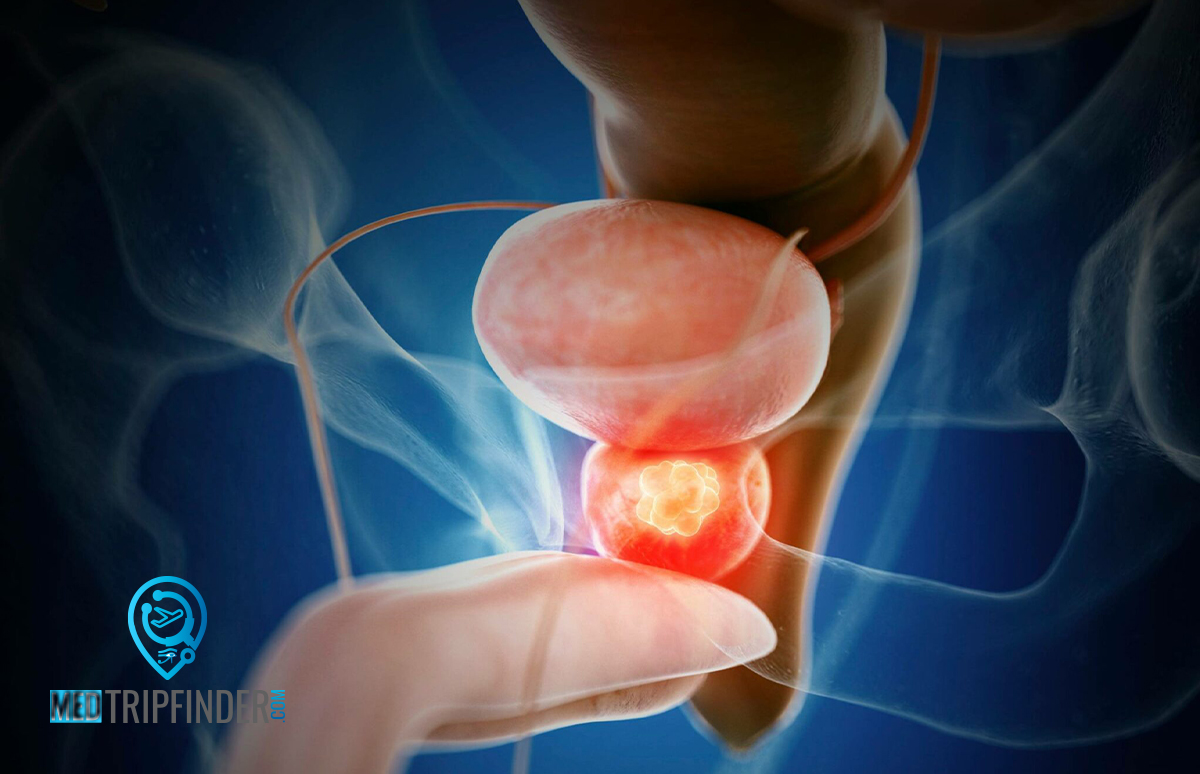
Prostate cancer is one of the most common cancers in men. It occurs when cells in the prostate gland, a small gland located below the bladder and surrounding the urethra, begin to grow abnormally and uncontrollably.
In many cases, prostate cancer develops slowly and does not cause symptoms in its early stages. However, in some cases, it can be aggressive and spread quickly to the bones or nearby organs. Therefore, early detection is crucial to improving treatment outcomes and chances of recovery.
Stages of prostate cancer
Prostate cancer is divided into four stages that determine how far it has spread and help doctors manage the most appropriate treatment plan:
1. Stage I: The tumor is small and confined within the prostate, usually without symptoms.
2. Stage II: The tumor is slightly larger but still confined to the prostate gland.
3. Stage III: The cancer begins to spread to nearby tissues such as the seminal vesicles.
4. Stage IV: The cancer spreads to lymph nodes, bones, or distant organs and is considered the most dangerous stage.
The appearance of prostate cancer
The appearance of prostate cancer varies depending on the stage at which it is discovered:
• In the early stages, it may appear as a small tumor within the gland that cannot be seen or felt.
• In advanced stages, it may spread to surrounding tissues such as the seminal vesicles or even to the bones.
Its exact form can be determined through imaging tests such as MRI and ultrasound, in addition to a prostate biopsy, which confirms the diagnosis.
Causes of prostate cancer
There is no single known cause of prostate cancer, but several risk factors increase the likelihood of developing it, including:
• Age: Risk increases after age 50.
• Genetic factors: A family history of prostate cancer.
• Genetic mutations: Certain inherited gene changes raise the risk.
• Unhealthy diet: High intake of saturated fats and low fiber consumption.
• Ethnicity: Men of African descent have a higher risk.
Symptoms of prostate cancer
In the early stages, prostate cancer may not cause noticeable symptoms. As the disease progresses, the following signs may appear:
• Urinary problems, such as difficulty starting urination or weak urine flow.
• Frequent urination, especially at night.
• Blood in urine or semen.
• Pain in the lower back, pelvis, or thighs.
• Erectile dysfunction or other sexual problems.
However, the presence of these symptoms does not necessarily mean cancer is present, but they do require medical evaluation.
What is the difference between prostate cancer and prostate enlargement?
Benign prostatic hyperplasia (BPH) is a common condition among aging men. It is non-cancerous and does not spread to other parts of the body. In contrast, prostate cancer involves abnormal cell growth that may spread to nearby tissues or distant organs if untreated.
The essential difference lies in the nature of the growth; benign enlargement increases the size of the gland and affects the flow of urine, while cancer changes the nature of the cells and threatens overall health.
Symptoms of benign prostatic hyperplasia (BPH)
Some symptoms may overlap between BPH and prostate cancer, such as:
• Difficulty urinating or interrupted flow.
• Frequent nighttime urination.
• Weak urine stream.
However, prostate cancer may also cause more serious symptoms such as blood in urine or semen and bone pain, which require prompt diagnosis to accurately determine the cause.
The importance of early prostate cancer detection
Early detection of prostate cancer greatly increases the chances of recovery, as treatment options are more varied and less risky in the early stages. Early detection can also prevent the disease from progressing and spreading to the bones or other organs.
Therefore, doctors recommend regular checkups such as prostate-specific antigen (PSA) testing and clinical examinations, especially for men over the age of fifty or those with a family history of the disease.
Prostate cancer test
Diagnostic tests for prostate cancer include:
• PSA Test: Measures the level of a protein produced by the prostate gland; high levels may indicate a problem.
• Biopsy: Tissue samples are taken from the prostate and examined under a microscope to confirm the diagnosis.
• MRI and Ultrasound Imaging: Used to determine the tumor’s location and size accurately.
Prostate cancer treatment options
Treatment for prostate cancer depends on the stage of cancer, the patient’s age, and overall health. Options include:
1. Active surveillance: For slow-growing cancers that do not cause severe symptoms.
2. Surgery (Prostatectomy): Removal of the prostate gland.
3. Radiation therapy: To destroy cancer cells and shrink tumors.
4. Hormone therapy: To reduce hormone levels that fuel cancer growth.
5. Chemotherapy or immunotherapy: For advanced or metastatic cases.
With MedTripFinder, the most suitable treatment plan is selected based on a detailed evaluation of each patient’s condition using the latest international treatment protocols.
Radical prostatectomy
Radical prostatectomy is one of the most common treatments for prostate cancer in early or intermediate stages. During this procedure, the entire prostate gland is removed along with surrounding tissues and sometimes nearby lymph nodes.
This surgery helps prevent the spread of cancer and achieve high cure rates when diagnosed early. However, careful patient evaluation is necessary because it may affect some urinary and sexual functions.
Laparoscopic prostatectomy
Laparoscopic prostatectomy is a major advancement in prostate surgery. It is performed through small abdominal incisions using specialized instruments and a high-resolution camera.
This technique offers greater precision, less bleeding, and less postoperative pain compared to open surgery, as well as a faster recovery period.
In advanced centers, robotic-assisted surgery may also be used to achieve the highest level of accuracy and minimize risks.
New advances in prostate cancer treatment
Recent years have witnessed remarkable progress in the treatment of prostate cancer thanks to modern technologies such as:
• Immunotherapy: Stimulates the immune system to attack cancer cells.
• Targeted therapy: Attacks cancer cells without harming healthy cells.
• Advanced radiation therapy (CyberKnife and IMRT): Precisely target the tumors while minimizing damage to surrounding tissues.
These innovations greatly improve disease control and quality of life for patients.
Signs of recovery from prostate cancer
Signs of recovery from prostate cancer include a stabilization or decrease in PSA levels after treatment, disappearance of urinary symptoms, and the absence of any signs of cancer spread in follow-up examinations.
At MedTripFinder, doctors are keen to follow up with patients after treatment with a detailed plan that includes regular tests and advanced imaging to ensure complete control of the disease.
My experience with prostate cancer
One patient in his early sixties from Saudi Arabia shared:
“My journey with prostate cancer began when I noticed troubling symptoms such as difficulty urinating and lower back pain. After medical tests, I was diagnosed and needed an advanced treatment plan. A doctor recommended traveling to Egypt because of its highly skilled specialists and reasonable costs, so I contacted MedTripFinder.
From the first moment, their team handled every detail, from scheduling appointments with top specialists to arranging accommodation and transportation, making my medical journey smooth and stress-free. After a thorough diagnosis, the medical team performed a laparoscopic prostatectomy at a specialized center. My recovery went smoothly thanks to continuous follow-up, and thankfully, I fully recovered and returned to my normal life with greater comfort and peace of mind.”
Prostate cancer is not the end of the road. It can be effectively managed and treated when diagnosed early and treated under the supervision of a specialized medical team.
At MedTripFinder, we are committed to providing the latest global treatment protocols along with full support for patients throughout their recovery journey. If you are experiencing symptoms or wish to undergo preventive screening, book your consultation now with leading specialists to ensure comprehensive care and the best possible results.
Other Operations
Robotic Partial Nephrectomy
It allows the removal of kidney tumor while keeping the kidney intact, which helps to improve kidney function and reduce potential complications.
Thulium Laser Prostate Treatment
Thulium laser technology is the latest in treating BPH, without experiencing any of the complications of other procedures.
Robotic Prostatectomy
Prostate removal is performed using robotic surgery in cases of prostate tumors, to get rid of cancerous cells safely and effectively.
Laser Treatment for BPH
It is a non-surgical and effective procedure to improve the symptoms of BPH using laser energy to vaporize the enlarged prostate in a safe and effective way.
Public FAQs
Not all prostate cancers are fatal; many cases are slow-growing and do not spread beyond the gland, making them less dangerous and easier to treat. However, the disease can become life-threatening if it is diagnosed at an advanced stage after spreading to the bones or other organs. Therefore, early detection plays a crucial role in reducing mortality rates and improving recovery outcomes.
Yes, prostate cancer can be cured, especially if it is detected in its early stages. In such cases, surgery, radiation therapy, or hormone therapy can achieve excellent results and completely control the disease. Even in advanced stages, treatments such as targeted therapy and immunotherapy can slow disease progression and significantly improve quality of life.
Prostate cancer becomes dangerous when it spreads beyond the gland to surrounding tissues, lymph nodes, or bones, making treatment more complex and reducing cure rates. The risk is also higher in aggressive forms that grow rapidly. For this reason, regular screenings after the age of 50, or earlier for those with a family history of the disease, are essential for early detection.
When prostate cancer spreads to the bones, it is considered an advanced stage that requires intensive treatment to slow its progression and relieve symptoms. Although this spread may affect life expectancy, modern treatments such as hormone therapy and immunotherapy can significantly extend patients’ lives and improve their quality of life.