


Table of Content
What are the reasons for hip replacement surgery?Before deciding to undergo the procedureHow is hip replacement surgery performed?How long does hip replacement surgery take?How long does the recovery period take after hip replacement?Benefits of hip replacement surgeryComplications after hip replacement surgeryHow long does the pain last after joint replacement surgery?What causes leg swelling after hip replacement?When can I start walking after hip replacement surgery?The importance of physical therapyIs hip replacement surgery dangerous?Is hip replacement suitable for elderly patients?Factors affecting surgical successExercises after hip replacement surgeryWhen can you return to daily activities?How much does hip replacement surgery cost in Egypt?The best orthopedic surgeon in EgyptConclusion
Hip Replacement Surgery
We work hard to create an exceptional experience for you during your treatment in Egypt. When you book through our website, you will receive a distinguished medical service inside Egypt. In your medical journey, we will provide you with tourism and entertainment services as well.
Hip Replacement Surgery
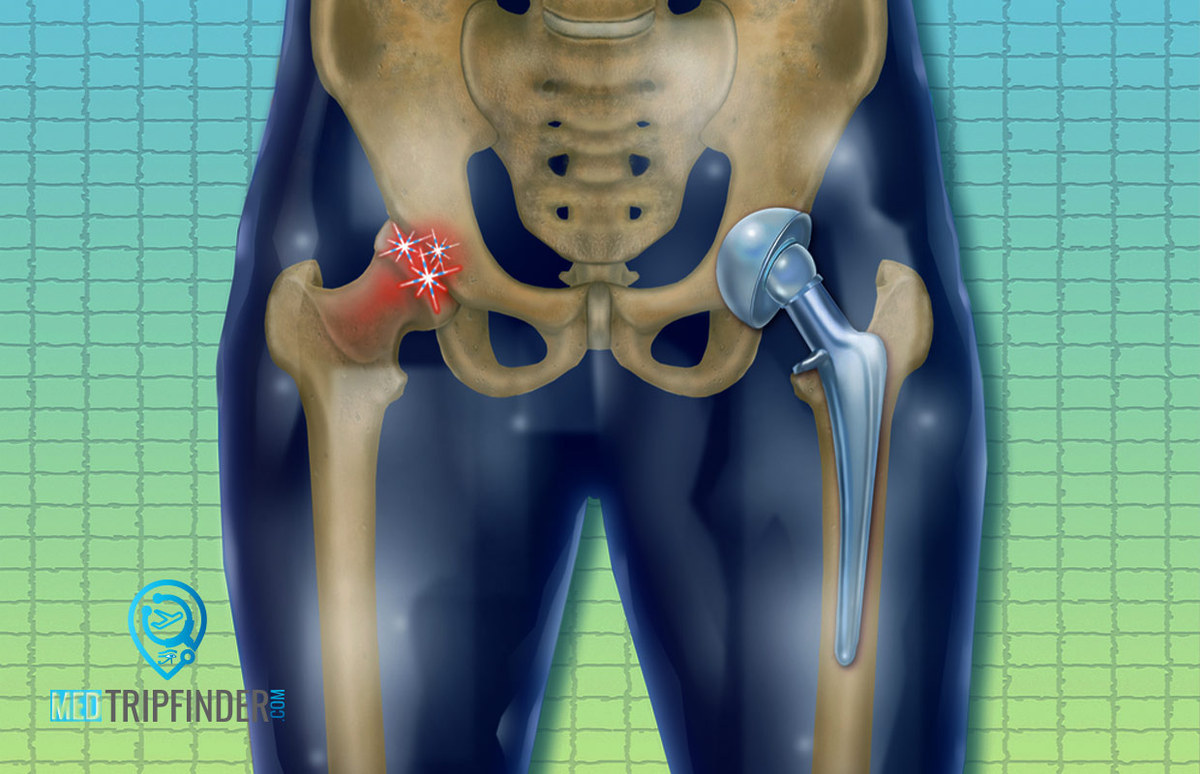
Hip replacement surgery is a procedure in which a damaged hip joint is replaced with an artificial joint. This procedure helps relieve pain, restore mobility, and significantly improve the patient’s quality of life. This article provides a comprehensive overview of the surgery, its causes, possible complications, and what to expect during recovery.
What are the reasons for hip replacement surgery?
Hip replacement surgery may be performed for several reasons, including:
• Arthritis: It is the most common cause as the cartilage covering the joint wears away, leading to pain and stiffness.
• Fractures and injuries: Especially fractures of the femoral head, which can cause irreversible joint damage.
• Avascular necrosis of the femoral head: When bone tissue dies due to reduced blood supply.
• Congenital or disease-related deformities: Conditions that affect the joint’s function and movement.
Before deciding to undergo the procedure
The patient should consult a specialist doctor to discuss the benefits and risks of the procedure, and to determine whether it is appropriate for his health condition.
In general, hip replacement surgery is an excellent treatment option for many older adults suffering from chronic hip pain and can help them regain their active lives.
How is hip replacement surgery performed?
1. Anesthesia: The procedure is performed under general or spinal anesthesia.
2. Surgical incision: The surgeon makes an incision in the front part of the thigh.
3. Removal of the damaged part: The damaged joint components, including the femoral head and the hip socket, are removed.
4. Implanting the artificial joint: The prosthetic joint is fixed in place. It typically consists of a metal component inserted into the femur and a plastic component placed in the pelvic socket.
How long does hip replacement surgery take?
Hip replacement surgery usually takes between 1.5 and 3 hours, depending on the complexity of the case, the type of artificial joint used, and the surgeon’s experience.
How long does the recovery period take after hip replacement?
Recovery may take a few weeks to several months, depending on the patient’s age and the complexity of the case. The recovery phase typically includes:
• Hospital stay: Usually one to two days.
• Physical therapy: To learn how to walk with crutches or a walker, strengthen muscles, and improve range of motion.
• Avoiding certain activities: Such as sitting cross-legged or lifting heavy objects.
Benefits of hip replacement surgery
• Pain relief: Significantly reduces joint pain and stiffness.
• Restoring mobility: Restores the ability to walk and perform daily activities normally.
• Improved quality of life: Enables patients to return to activities they enjoy.
Complications after hip replacement surgery
Some complications may occur after hip replacement surgery, including:
• Infection at the surgical site
• Damage to nerves or blood vessels during surgery
• Blood clots in the deep veins of the leg
• Dislocation of the artificial joint if the new joint is not properly fitted
• Inflammation around the prosthetic joint
• Wear of the artificial joint over time, possibly requiring replacement
Most complications can be minimized by choosing an experienced orthopedic surgeon who has the competence to perform a hip replacement with the highest success and safety rates.
How long does the pain last after joint replacement surgery?
Pain after hip replacement surgery is normal, and its duration and intensity vary from person to person. In general, pain may last for several weeks and gradually improves. Mild discomfort may persist longer but can be managed with medication and physical therapy.
Factors affecting pain duration:
• Type of surgery, its complexity, and additional procedures performed
• The patient’s overall health and age
• Patient commitment to physical therapy which helps strengthen muscles and speed up recovery.
What causes leg swelling after hip replacement?
Swelling after surgery is common and may last several weeks, gradually improving over time. The cause of leg swelling after hip replacement surgery is:
• Inflammation as a natural response to surgery
• Fluid retention in surrounding tissues
• Increased physical activity
Ways to reduce swelling
• Rest by elevating the leg and avoid prolonged standing.
• Apply cold compresses wrapped in a towel to the swollen area.
• Take anti-inflammatory medications
• Wear compression stockings
When can I start walking after hip replacement surgery?
The start of walking after hip replacement surgery depends on several factors, including the type of surgery, the patient's overall health, and the speed of recovery. Walking usually begins the day after surgery or within two days, often with the assistance of a physical therapist. Early movement helps improve recovery and reduce the risk of blood clots.
The importance of physical therapy
• Teaching the patient how to walk correctly using crutches or a walker
• Strengthening muscles to improve stability and balance
• Increasing range of motion to restore full joint movement
Patients should:
• Follow the prescribed physical therapy program to accelerate recovery and improve final results.
• Avoid any activity that may cause pain or strain to the joint.
• Be patient and do not expect immediate results, as full recovery takes time.
Is hip replacement surgery dangerous?
Like any surgical procedure, hip replacement carries some risks. However, it is generally considered a safe and highly successful procedure when performed by experienced surgeons. These risks include infection, blood clots, and joint dislocation, but these are rare.
Is hip replacement suitable for elderly patients?
Older adults are often excellent candidates for hip replacement surgery. It is a common and successful procedure for relieving chronic joint pain, restoring mobility, and improving quality of life. Many elderly patients return to normal daily activities after recovery. However, the patient's overall health must first be assessed before surgery to ensure they can tolerate it.
Why is it beneficial for older adults?
• Relieves chronic pain that limits a person's mobility and significantly impacts their quality of life.
• Restores joint mobility, allowing the patient to walk and perform other daily activities more easily.
• Improves quality of life by relieving pain and restoring mobility, enabling the patient to enjoy life more.
Factors affecting surgical success
• The patient’s overall health, he must be in good general health to undergo surgery.
• The surgeon’s expertise plays an important role in the success of the procedure.
• The patient’s commitment to the rehabilitation and physical therapy program helps strengthen muscles and improve final results.
Exercises after hip replacement surgery
Exercises are an essential part of recovery. Post-hip replacement exercises aim to:
• Speed up healing by improving circulation and tissue nourishment
• Reduce pain and muscle tension
• Prevent complications such as blood clots or joint dislocation
Improve quality of life by strengthening muscles surrounding the new joint, increasing range of motion, and improving stability and balance.
Common post-surgery exercises
• Active range-of-motion exercises: These involve moving the joint slowly and within a safe range of motion, with the aim of increasing flexibility.
• Muscle strengthening exercises: These focus on strengthening the thigh, buttocks, and hip muscles, which help to stabilize the new joint and improve strength and stability around the joint.
• Balance exercises: Help improve balance and prevent falls.
• Walking exercises: Start with crutches or a walker, then gradually increase independence.
• Deep breathing exercises: Help prevent lung infections.
Before starting any exercise program, patients should consult their doctor or physical therapist, who will design a plan tailored to their specific condition.
Examples of simple exercises after hip replacement surgery
• Leg raising: Lie on your back and slowly lift one leg.
• Knee rotation: Lie on your back, bend the knee, and rotate it in a small circle.
• Glute bridge: Lie on your back and lift your hips off the ground.
• Standing and sitting: Practice standing up and sitting down from a chair correctly.
Important tips
• Listen to your body: Stop exercising if you feel severe pain.
• Regularity: Exercise regularly to achieve the best results.
• Gradual progression: Start with simple exercises and increase intensity gradually.
• Consult a physical therapist: A physiotherapist can design a personalized exercise program and guide you correctly.
Note: Certain movements that may harm the new joint should be avoided, such as deep squatting or crossing the legs.
When can you return to daily activities?
You can return to many daily activities a few weeks after surgery, but you should consult your doctor before resuming intense physical activities such as running or sports that involve jumping.
It is important to note that recovery after hip replacement surgery is a gradual process that requires patience and commitment to a physical therapy program.
How much does hip replacement surgery cost in Egypt?
The cost of hip replacement surgery in Egypt varies due to several factors. The most important factors affecting the cost include:
1- Type of artificial joint
• Materials used: The cost varies depending on the materials used to manufacture the prosthetic joint.
• Technology used: Some modern technologies used in prosthetic joints may be more expensive.
2- Complexity of the procedure
• Patient’s condition: If the patient has other health conditions, the surgery may require more time and effort, increasing the cost.
• Additional procedures: Any extra surgical procedures that may be necessary during the procedure can affect the final cost.
3- Surgeon’s fees
• Surgeon’s experience: Costs vary depending on the surgeon’s expertise and reputation.
• Duration of the surgery: The longer the procedure takes, the higher the cost
4- Anesthesia
• Type of anesthesia: The type of anesthesia used (general or spinal) affects the cost.
• Duration of anesthesia: The longer the duration of anesthesia, the higher the cost.
5- Hospital
• Hospital reputation: Hospitals with a good reputation and equipped with the latest medical technology tend to charge higher fees
• Hospital stay: The number of days the patient stays in the hospital affects the total cost.
• Room type: Private rooms are more expensive than shared rooms.
6- Tests and medical examinations
• Number of tests: The more pre- and post-operative tests, the higher the cost.
7- Physical therapy and rehabilitation
• Program duration: The duration of the physiotherapy and rehabilitation program affects the cost.
• Type of program: Specialized rehabilitation programs may be more expensive.
In all cases, patients should prioritize the quality of healthcare and the surgeon’s experience, not just the cost.
The best orthopedic surgeon in Egypt
Choosing the best orthopedic surgeon in Egypt mainly depends on experience and reputation. At MedTripFinder, we strive to help you select the most suitable doctor who meets all your medical and psychological needs without confusion or effort.
Conclusion
Hip replacement surgery is an effective procedure that helps restore movement and reduce pain for patients suffering from hip joint problems. Although some risks and complications may exist, the benefits of this surgery often outweigh them, especially when medical instructions are followed carefully.
If you suffer from chronic hip pain that affects your daily life and other treatments have not provided relief, hip replacement surgery may be the most suitable option for you.
Other Operations
Flat Foot Treatment
Flat foot is a common condition that can affect quality of life if not properly managed with advanced treatments and assistive devices.
Treatment of ACL Injury
ACL injuries are common and painful, requiring accurate diagnosis and appropriate treatment to ensure a full recovery.
Achilles Tendon Injury Treatment
Achilles tendon injury, whether it is inflammation or a tear, requires careful medical attention and an effective treatment plan.
Bowed Legs Treatment
Bowed legs is a condition causing leg curvature, affecting walking and balance. The treatments range from exercises to surgery.