


Table of Content
What is the thyroid gland?Causes of thyroid enlargementSymptoms of thyroid disordersAppearance of thyroid enlargementThyroid treatmentInterventional radiology in treating the thyroid glandTreatment of thyroid enlargement in childrenCan hyperthyroidism be cured?Can thyroid disorders be completely cured?What is the cost of a thyroid test?Is thyroid enlargement dangerous?Can thyroid disease cause death?Is it possible to live with an enlarged thyroid gland?Non-surgical treatment of thyroid enlargementIs hypothyroidism dangerous?Does thyroid enlargement mean cancer?When does the doctor resort to thyroid surgery?
Thyroid Gland Treatment
We work hard to create an exceptional experience for you during your treatment in Egypt. When you book through our website, you will receive a distinguished medical service inside Egypt. In your medical journey, we will provide you with tourism and entertainment services as well.
Thyroid Gland Treatment
Medical advancements over the past ten years have created a breakthrough in the treatment of thyroid gland disorders, after they have been considered difficult to treat for many years. In this article, we focus on answering all questions related to developments in thyroid treatment.
What is the thyroid gland?
The thyroid gland is one of the most important elements that regulate the body’s chemistry and ensure continuous coordination between the functions of vital organs, including metabolism and the regulation of brain signals within the endocrine system.
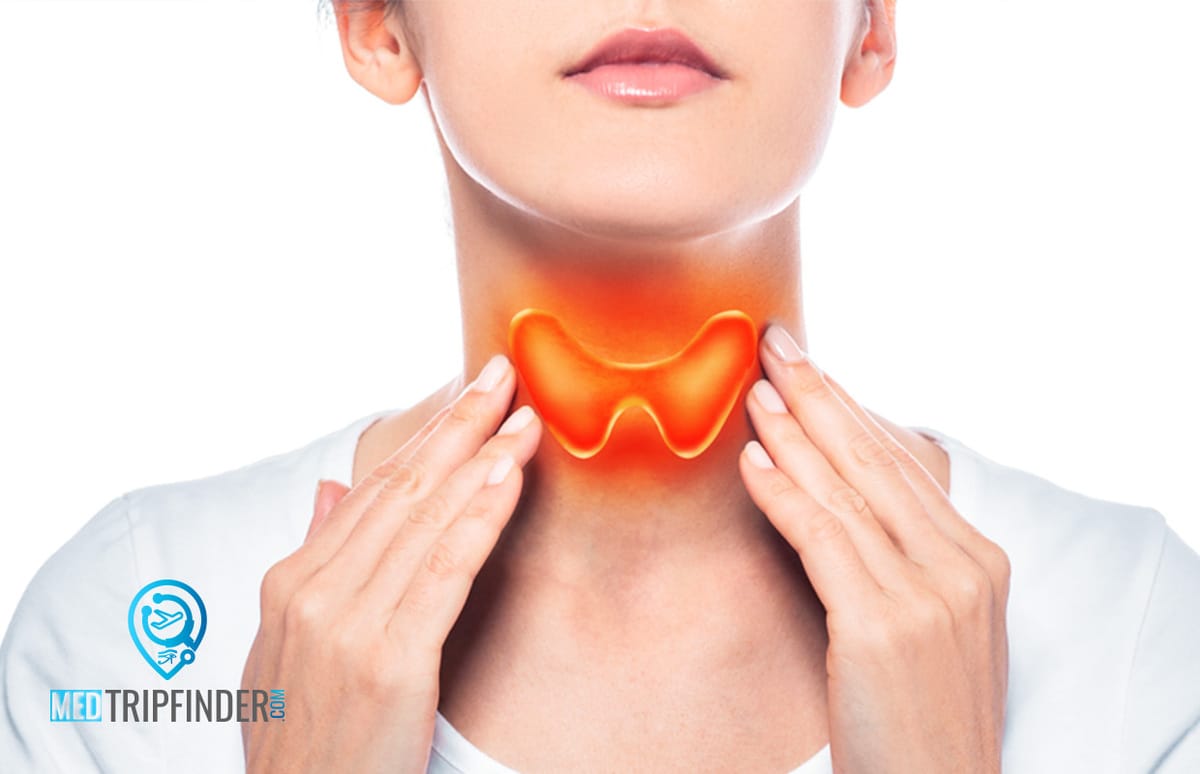
The thyroid gland is located at the front of the neck in front of the trachea and consists of two butterfly-shaped lobes. The cells of the thyroid gland differ from other body cells in that they uniquely secrete the hormones thyroxine (T3, T4).
Thyroid hormones control the metabolism of body cells, and their imbalance affects blood pressure, heart rate, and mood.
Several factors affect the secretion of thyroid hormones, including the iodine content in food, pituitary hormones that stimulate or inhibit the thyroid, pregnancy hormones, physical activity, and certain medications.
Causes of thyroid enlargement
• Autoimmune diseases, such as Hashimoto’s disease.
• Inflammation resulting from viral infection, such as Graves’ disease.
• Hormonal changes during pregnancy.
• Exposure to high amounts of iodine through contrast imaging.
• Swelling of the parathyroid gland.
Symptoms of thyroid disorders
There are various symptoms for both hyperthyroidism and hypothyroidism, and the symptoms of thyroid enlargement differ between men and women.
Symptoms of thyroid enlargement:
• Swelling in the neck area.
• Difficulty swallowing and breathing.
• A wheezing sound in the chest with coughing.
• Hoarseness due to vocal cord weakness.
There are differences between thyroid symptoms in women and men, such as symptoms of thyroid enlargement in women:
• Hormonal imbalance.
• Rapid heartbeat.
• Osteoporosis.
• Increased chances of polycystic ovary syndrome (PCOS).
• Heavier menstrual bleeding.
• Reduced fertility and delayed pregnancy.
• Increased risk of early menopause.
Symptoms of hyperthyroidism in women:
• Rapid heartbeat.
• Hypertension.
• Excessive sweating.
• Stress and anxiety.
• Insomnia and sleep problems.
• Shortness of breath and rapid breathing.
• Weight loss despite increased appetite.
• Increased activity levels despite fatigue and weakness.
General hypothyroidism symptoms
• Weight gain.
• Increased cholesterol levels.
• Slow heart rate.
• Muscle pain and a constant feeling of fatigue and exhaustion.
• Depression, decreased activity, and memory problems.
• Feeling cold.
• Hair loss and brittle nails.
• Inactivity and laziness.
Hypothyroidism symptoms in men:
• Dry and pale skin.
• Muscle pain.
• Slow heartbeat and shortness of breath due to weakness of the heart and lungs.
• Decreased sperm production and fertility as it affects testosterone production.
Hypothyroidism symptoms in women:
• Pain in the arm and shoulder muscles.
• Polycystic ovaries as it affects ovulation.
• Delayed pregnancy.
• Cessation of milk production in breastfeeding women.
• Continuous fatigue and exhaustion.
• Feeling cold even in summer.
• Sleeping for long periods.
• Numbness in the nerves of the hands and fingers.
• Hair loss.
• Sadness and depression.
• Hoarseness of voice.
• Dry skin.
• Loss of libido.
Appearance of thyroid enlargement
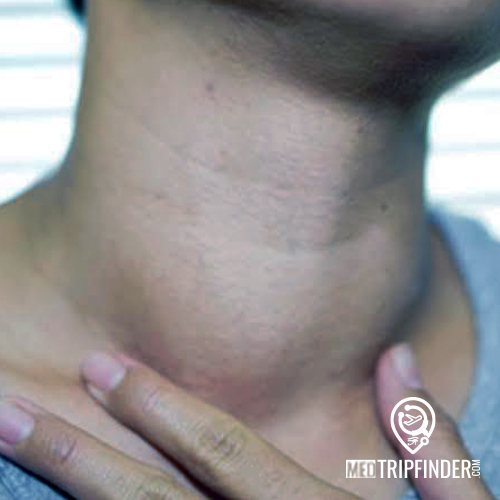
This is how thyroid enlargement appears, which a man may notice while shaving, or a woman may notice while applying makeup.
Thyroid treatment
The type of treatment depends on the imbalance in thyroid hormone secretion:
• In cases of hypothyroidism, treatment involves hormone replacement using levothyroxine tablets, which are a thyroid hormone analog, and nutritional therapy, along with monitoring calcium levels in the body.
• In cases of hyperthyroidism, thyroid-suppressing medications such as carbimazole or amiodarone can be used, which prevent the activation of thyroid hormones. Radioactive iodine therapy can also be used, but it is not recommended for pregnant women.
• In cases of thyroid enlargement, surgical removal or interventional radiology may be considered. The incidence of thyroid enlargement is higher in women than in men due to several factors, including differences in immune systems and hormonal nature, which affect thyroid hormone levels.
Interventional radiology in treating the thyroid gland
Interventional radiology is considered one of the latest non-surgical treatment techniques that help treat the thyroid gland without surgery, by using needles and precise tools, to treat thyroid enlargement through radiofrequency ablation.
Advantages of treating the thyroid gland with interventional radiology:
• Non-surgical procedure.
• Shorter recovery period.
• No scars or wounds.
• No need for lifelong hormone replacement.
• Preserves thyroid gland function.
Treatment of thyroid enlargement in children
The child's age and condition determine their suitability for radioactive iodine, medication, or surgical removal. It is important to note that thyroid medications may interact with milk; therefore, a sufficient time should be left between administering the medication and breastfeeding to ensure its effectiveness.
Can hyperthyroidism be cured?
This question concerns many patients. By adhering to prescribed medications and regularly monitoring thyroid tests, hormone levels can be reduced, and the condition can certainly be managed.
Thyroid tests include the following:
• TSH, T3, T4.
• Antibody tests.
• Radioactive iodine test.
Can thyroid disorders be completely cured?
Whether a person suffers from hypothyroidism or hyperthyroidism, it can be completely treated if the condition is properly diagnosed and managed, with regular follow-up and necessary tests.
What is the cost of a thyroid test?
The cost of thyroid tests varies from one laboratory to another, depending on the available facilities and the speed of obtaining results.
In severe cases of hyperthyroidism, visible swelling appears at the front of the neck, known as thyroid enlargement (goiter).
Is thyroid enlargement dangerous?
Yes, certainly—especially in elderly patients with chronic diseases. Thyroid enlargement can lead to complications such as heart disease and atrial fibrillation (very rapid heart rate). The enlarged gland may also press on the trachea, causing suffocation. Studies have shown it may play a role in fetal abnormalities and autism if a pregnant mother has hyperthyroidism.
Can thyroid disease cause death?
Yes, in rare cases, thyroid hormone storm (for example, in Hashimoto’s disease) may lead to death if hormone levels are not quickly controlled. However, most cases of thyroid enlargement are treatable.
Is it possible to live with an enlarged thyroid gland?
Certainly, by adhering to the treatment plan, regular medical follow-up, and periodic testing, the condition can be monitored and managed. Treatment may involve medication, partial or total surgical removal, or interventional radiology.
By following a healthy lifestyle and balanced diet, you can prevent many diseases. Herbal remedies may also help reduce thyroid hormone levels. It is recommended to consume low-iodine foods and iron-rich foods such as broccoli, cabbage, and arugula.
Drinks that may help reduce thyroid activity, such as:
• Lemon water.
• Turmeric water.
• Celery juice.
• Cucumber juice.
• Lettuce, parsley, and coriander juice.
Although herbal treatments may have a role, they do not replace prescribed medications or regular medical follow-up.
Non-surgical treatment of thyroid enlargement
• Interventional radiology:
Radiofrequency waves are directed to the enlarged parts of the gland using a guided needle. It is a minimally invasive procedure that does not require general anesthesia and usually takes less than half an hour, after which the patient can resume normal life. Although treating goiter with interventional radiology is more expensive than surgery, it is often considered a safer and more effective option.
• Radioactive iodine therapy:
This is used to treat hyperthyroidism by destroying overactive thyroid cells and reducing hormone secretion.
Is hypothyroidism dangerous?
Yes, chronic hypothyroidism can affect the heart muscle and increase cholesterol levels, posing serious risks, especially for the elderly. However, these complications can be avoided with proper treatment and regular follow-up.
Does thyroid enlargement mean cancer?
Not every thyroid enlargement indicates cancer. If enlargement is present, you should consult a doctor for an examination and the necessary scans and tests to determine whether the enlargement is benign or malignant.
When does the doctor resort to thyroid surgery?
The doctor may resort to surgical removal of the thyroid gland, especially in cases of thyroid cancer. It is also suitable for patients with benign enlargement when interventional radiology is not appropriate. After surgery, the patient must take hormone replacement tablets to compensate for thyroid hormones, and their condition remains stable with regular follow-up.
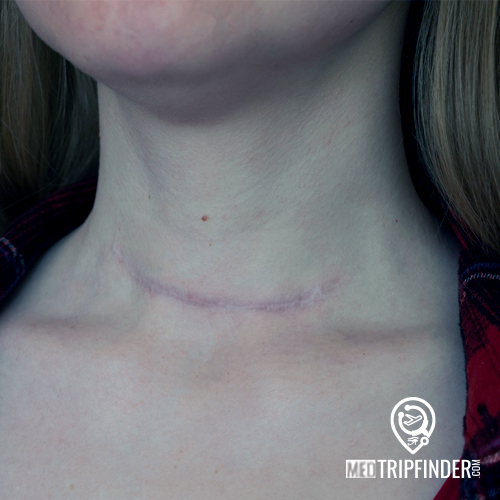
Some patients may worry about the appearance of the neck after thyroid surgery. However, the procedure leaves only a small scar that can be managed with proper care and topical creams, and it usually fades over time. This is how the neck may look after thyroid surgery.
Other Operations
Bile Duct Obstruction
Interventional radiology treats bile duct obstruction by restoring flow using stents and minimally invasive techniques.
Kidney Diseases Treatment
Interventional radiology treats kidney diseases using image-guided, minimally invasive procedures with high precision and faster recovery.
Uterine Fibroids Treatment
Interventional radiology shrinks fibroids by blocking blood supply, offering effective, minimally invasive, non-surgical treatment option.
Varicocele Treatment
Interventional radiology treats varicocele by closing veins minimally invasively, improving recovery, sperm quality, and outcomes.