


Table of Content
Types of foot deformities in childrenWhat is clubfoot?Is clubfoot considered a disability?Types of clubfootCauses of ClubfootDiagnosis of clubfoot in newbornsTreatment of clubfoot in childrenStages of clubfoot treatmentTips for parentsClubfoot surgeryClubfoot bracePediatric orthopedic doctor in EgyptConclusion
Treatment of Clubfoot
We work hard to create an exceptional experience for you during your treatment in Egypt. When you book through our website, you will receive a distinguished medical service inside Egypt. In your medical journey, we will provide you with tourism and entertainment services as well.
Treatment of Clubfoot
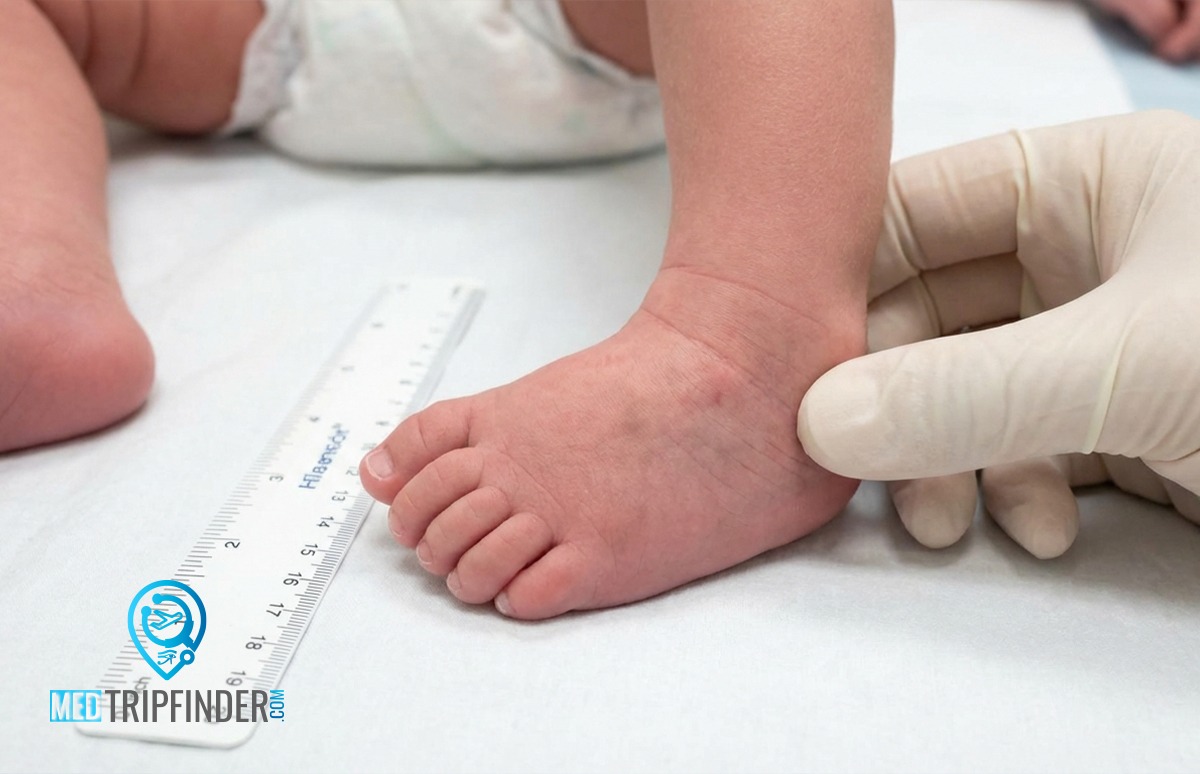
Clubfoot is a congenital deformity present at birth in which the foot takes on an abnormal shape resembling a claw. This condition can affect a child’s ability to walk and requires early treatment to avoid long-term complications. It is characterized by an abnormal curvature of the foot bones, tendons, and muscles, causing the foot to turn inward or downward.
Types of foot deformities in children
Clubfoot is not the only type of foot deformity in children. Other conditions include:
• Flat foot: When the foot arches are absent or very low.
• In-toeing foot: A condition where the foot turns abnormally inward while walking.
• Clubfoot: A deformity where the foot turns inward or downward.
What is clubfoot?
Clubfoot, also known as talipes equinovarus, is a medical condition in which a child is born with one or both feet twisted inward or downward. The condition may be mild and easily corrected, or more complex and require surgical intervention. Clubfoot typically involves twisting of the foot bones and tendons, resulting in a noticeable deformity.
Is clubfoot considered a disability?
Clubfoot may be considered a physical disability if left untreated, as it can significantly affect walking and balance. However, with early and appropriate treatment, the condition can often be greatly improved or completely corrected, allowing individuals to live a normal life without major limitations.
Types of clubfoot
There are different forms of clubfoot depending on the severity and location of the deformity. Common types include:
• Mild clubfoot (Peroneal Spastic Flatfoot): In this type, the curvature of the toes is mild, with some tension in the tendons and muscles on the outer side of the leg.
• Severe clubfoot: The toes are strongly curved, and the ankle and foot may be significantly twisted.
• Complex clubfoot: This is the most severe form, involving multiple deformities beyond toe curvature, including abnormalities in the ankle and foot bones.
Causes of Clubfoot
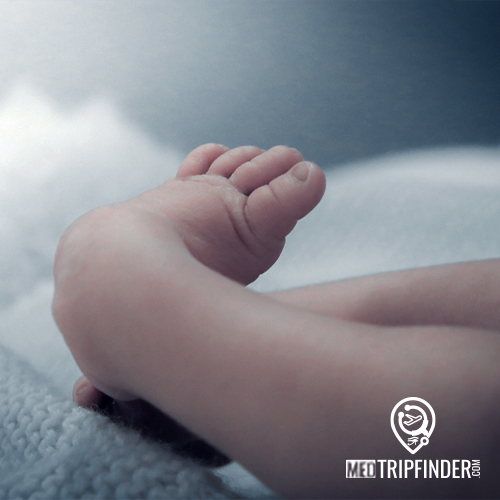
The exact cause of clubfoot is unknown, but several factors may contribute, including:
• Genetic factors: A family history may increase the risk, as there may be a genetic predisposition to developing clubfoot.
• Fetal position in the womb: An abnormal position of the fetus in the womb can affect foot development.
• Neuromuscular disorders: Some conditions, such as cerebral palsy, may be associated with foot deformities.
Diagnosis of clubfoot in newborns
Clubfoot in infants is a condition present at birth where the baby’s feet appear twisted inward or downward. It is usually diagnosed at birth during a physical examination. In some cases, it can be detected before birth through an ultrasound. Early evaluation by a specialist is necessary to determine the best treatment plan. If untreated, children with clubfoot may have difficulty walking. Early intervention greatly increases the chances of successful correction.
Treatment of clubfoot in children
Treatment of clubfoot depends on the severity of the condition and the child’s age when the treatment begins. Treatment options include:
• Conservative treatment: This is the first-line approach, involving repeated casting to gradually correct the foot position. The Ponseti method is the most commonly used technique, where casts are applied and adjusted weekly to improve alignment.
• Physical therapy: Specific exercises are an important part of treatment and help improve mobility and muscle strength. Examples include:
o Tendon stretching exercises: Gently stretching the foot to lengthen tendons.
o Balance exercises: To improve standing and walking stability.
o Strengthening exercises: Targeting weak muscles in the foot and leg.
• Surgery: In severe cases that do not respond to conservative treatment, surgical correction may be necessary to correct the foot's position. Surgery involves repairing tendons and bones to ensure a normal foot position.
Stages of clubfoot treatment
Treatment usually progresses through several stages:
1. Serial casting (Ponseti method): A cast is applied and changed weekly or every two weeks to gradually correct the foot position. This stage may last several weeks or months.
2. Achilles tenotomy (if necessary): In some cases, a minor procedure may be performed to lengthen the tendon if it is too tight.
3. Special brace (Ponseti shoes): After correction, the child wears a brace attached to a bar to maintain the corrected position. It is typically worn 23 hours per day initially, then gradually reduced over several years.
4. Physical therapy: Exercises help maintain flexibility and strengthen muscles.
Tips for parents
• Regular checkups: Examine newborns’ feet regularly to detect abnormalities.
• Follow medical advice: Strictly adhere to the treatment plan recommended by the doctor.
• Be patient: Treatment can take time, but persistence leads to successful outcomes.
Clubfoot surgery
Surgery may be required if casting alone cannot correct the deformity. The goal of surgery is to correct bone alignment and lengthen tight tendons to achieve a normal foot position.
Tendon lengthening surgery for clubfoot
This procedure is usually performed in severe cases where the tendons are too short or tight to allow correction through casting alone. The tendons are surgically lengthened to allow the foot to move freely and achieve proper alignment.
Complications of clubfoot surgery
Like any surgery, potential complications include:
• Risk of infection at the wound site.
• Arthritis or inflammation may occur in the joints surrounding the foot, especially in severe or complicated cases.
• Stiffness in the foot after surgery.
• Nerve damage surrounding the foot may occur during surgery, leading to loss of sensation or impaired movement.
• Recurrence of the deformity in some cases, especially if the physical therapy program is not followed completely, necessitates additional measures.
• Future growth problems of the foot or leg bones, in rare cases.
• Poor wound healing, especially in children with other health problems.
To reduce these risks:
• Choose an experienced pediatric orthopedic surgeon.
• Ensure proper preoperative preparation and tests.
• Follow the rehabilitation plan carefully.
• Attend regular follow-up appointments to monitor the child's condition and ensure there are no complications.
Clubfoot brace
A clubfoot brace, commonly known as the Ponseti brace, is an essential part of treatment after casting. It helps maintain the corrected foot position and prevents the deformity from returning. The child wears it for several hours a day to prevent the deformity from recurring.
How long should a child wear a clubfoot brace?
Typically, the child wears the brace 23 hours per day during the first few months after treatment. Later, it is worn only at night for 12–14 hours daily for up to 3–4 years to maintain correction.
Pediatric orthopedic doctor in Egypt
When searching for the best pediatric orthopedic doctor in Egypt to treat clubfoot, it is recommended to consult experienced pediatric orthopedic specialists to receive the necessary guidance for safe and effective treatment without any potential complications or risks. Early consultation is always advised to ensure proper diagnosis and treatment.
Conclusion
Clubfoot is a condition that can be effectively treated if diagnosed early. Thanks to modern medical advances, both casting and surgical methods offer children an excellent chance to live normal lives without significant complications. Parental commitment to the treatment plan and consistent use of the brace, as prescribed by the doctor, are key factors in achieving successful outcomes and preventing recurrence. Consulting specialized doctors ensures the best possible care for children with this condition and helps improve their long-term quality of life.
Other Operations
Treatment of hip dislocation in children
It is a medical condition that occurs when the femoral head is unstable in the pelvic cavity. Early detection and treatment is essential for the healthy development.
Hip Replacement Surgery
Hip replacement surgery is a common procedure aimed at improving the lives of those suffering from hip joint problems.
Bowed Legs Treatment
Bowed legs is a condition causing leg curvature, affecting walking and balance. The treatments range from exercises to surgery.
Knee Osteoarthritis Treatment
Knee osteoarthritis treated with medications, therapy, injections, and surgery in severe cases improving mobility and pain.