



Table of Content
What is a liver tumor?Types of liver tumorsSymptoms of liver tumorsCan a liver tumor be benign?What are benign liver tumors?Symptoms of benign liver tumorsCauses of liver tumorsImaging of liver tumorsIs the presence of a liver tumor dangerous?Does the presence of a lesion in the liver mean cancer?Treatment of liver tumorsLiver tumor doctorsHow to prevent liver tumors?Conclusion
Liver Tumors Treatment
We work hard to create an exceptional experience for you during your treatment in Egypt. When you book through our website, you will receive a distinguished medical service inside Egypt. In your medical journey, we will provide you with tourism and entertainment services as well.
Liver Tumors Treatment
MedTripFinder The liver is a vital organ that plays a key role in detoxifying the body, producing proteins, and storing energy. Liver injuries or diseases are among the most serious medical conditions that directly and significantly impact a patient's health. In this article, we will discuss in detail the types of liver tumors, their symptoms, and treatment options, including surgery, interventional radiology, and injections. We will also highlight the importance of choosing a specialized doctor and the appropriate medical center to achieve the best therapeutic outcomes.
What is a liver tumor?
It is an abnormal growth of cells in liver tissue. These tumors can be benign (non-cancerous) or malignant (cancerous).
Types of liver tumors
Liver tumors include:
• Benign liver tumors:
They usually consist of normal liver cells that grow uncontrollably. They typically do not spread to other parts of the body and may not cause any symptoms. Examples include hemangiomas, hepatic adenomas, focal nodular hyperplasia, and congenital liver tumors.
• Malignant liver tumors (liver cancer):
They consist of abnormal cells that grow uncontrollably, destroy healthy tissues, and spread rapidly to other parts of the body, thus requiring immediate treatment. Examples include primary liver cancer (hepatoma) that originates in the liver cells themselves and bile duct cancer (cholangiocarcinoma), and metastatic liver cancer that spreads to the liver from another type of cancer elsewhere in the body (such as the colon or lung).
Symptoms of liver tumors
Early symptoms of liver tumors are often absent or nonspecific. As the disease progresses, symptoms may include:
• Pain in the upper right abdomen.
• Unexplained weight loss.
• Loss of appetite.
• Nausea and vomiting.
• Enlarged liver.
• General fatigue and weakness.
• Jaundice (yellowing of the skin and eyes).
• Swelling in the legs and abdomen.
• Light-colored stools and dark urine.
Can a liver tumor be benign?
Yes, liver tumors can be benign. Benign tumors are not cancerous and do not spread to other parts of the body. However, some benign tumors may require treatment if they cause symptoms or complications.
What are benign liver tumors?
Benign liver tumors include several types, such as:
• Hepatic hemangioma: This is the most common type of benign tumor, and it consists of an abnormal collection of blood vessels.
• Hepatic adenoma: This is a rare tumor that occurs in liver cells.
• Focal nodular hyperplasia: This is an enlargement of liver tissue due to an abnormal response to injury or inflammation.
Symptoms of benign liver tumors
Benign liver tumors usually do not cause symptoms and are often discovered incidentally during medical examinations. If symptoms appear, they may include:
• Abdominal pain or discomfort.
• Abdominal enlargement.
• A feeling of fullness or heaviness.
Causes of liver tumors
The causes of liver tumors vary depending on the type of tumor, and may include:
• Viral hepatitis (B and C) may lead to the development of malignant liver tumors.
• Liver cirrhosis resulting from chronic alcohol use or chronic diseases such as viral hepatitis.
• Genetic factors may play a role in the development of some types of liver tumors.
Imaging of liver tumors
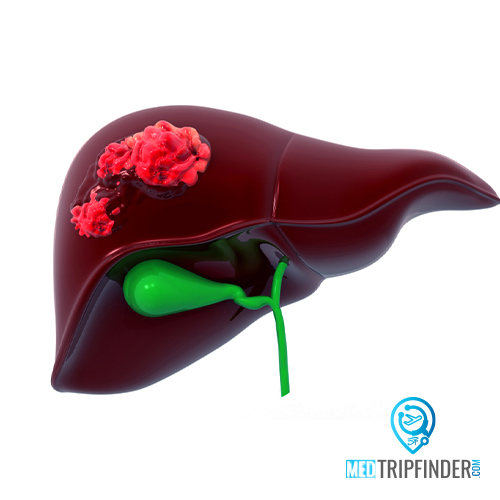
Liver tumor images can vary depending on the tumor type, size, and location. Liver tumors can be diagnosed using X-rays, ultrasound, magnetic resonance imaging (MRI), and computed tomography (CT) scans. Blood tests to measure liver enzymes and proteins also help diagnosis, and a liver biopsy, which involves taking a small sample of liver tissue to examine under a microscope and confirm the diagnosis.
Is the presence of a liver tumor dangerous?
The seriousness of a liver tumor depends on its type, size, and location. Benign tumors are often not dangerous and may not require treatment unless they cause symptoms or complications. Malignant tumors, however, can be dangerous and require immediate treatment.
Does the presence of a lesion in the liver mean cancer?
The presence of a lesion in the liver does not necessarily mean cancer. Liver lesions may be benign or caused by inflammation or injury. Accurate diagnosis requires advanced medical tests to determine the nature of the lesion and whether it is cancerous or not.
Treatment of liver tumors
The treatment of liver tumors varies depending on the type of tumor, its size, location, extent of spread, and the patient’s overall health condition. Treatment options include:
• Surgery: Removing the tumor if its size and location allow.
• Radiation therapy: Destroying cancer cells using radiation.
• Chemotherapy: Using medications to kill cancer cells or stop their growth.
• Interventional radiology: Advanced techniques to deliver treatment directly to the tumor.
• Thermal ablation: Using heat to destroy cancer cells.
• Targeted therapy: Specific treatments target abnormal genes or proteins in cancer cells.
• Liver transplantation: In cases where the liver is severely damaged and cannot be repaired.
• Supportive or palliative care: To relieve symptoms and improve quality of life.
Treatment of liver tumors with interventional radiology
Interventional radiology is a modern method for treating liver tumors. It involves guiding specialized instruments into the body using X-rays or magnetic resonance imaging (MRI). Interventional radiology techniques include:
• Radiofrequency ablation (RFA): Using electrical energy (radio waves) to generate heat to destroy cancer cells.
• Microwave ablation: A technique similar to RFA, but uses microwave energy to generate heat.
• Thermal ablation: Using heat to destroy tumors.
Treatment of liver tumors with catheterization
Catheterization is used to deliver treatment directly to the tumor using interventional radiology guidance. These methods include:
• Transarterial chemoembolization (TACE): Chemicals are injected directly into the tumor via a catheter, reducing blood flow to the tumor and enhancing the effect of chemotherapy.
• Transarterial radioembolization (TARE): Directing radioactive particles to the tumor through a catheter to destroy cancer cells.
Treatment of liver tumors with injections
Liver tumor injection is one technique used to deliver medications directly to the tumor. These techniques include:
• Percutaneous ethanol injection: Injecting alcohol directly into the tumor to destroy cancer cells.
• Injection of therapeutic agents: Injecting chemical or radioactive substances directly into the tumor.
Treatment of liver tumors with radiofrequency ablation
Radiofrequency ablation is another interventional radiology treatment method, in which the specialist inserts a thin needle into the tumor, which emits heat waves to destroy cancer cells. This technique is commonly used to treat small tumors that cannot be surgically removed.
Surgical removal of liver tumors
Surgical removal of liver tumors is a primary treatment option, especially if the tumor is localized and has not spread to other parts of the liver or body. Procedures include:
• Partial hepatectomy: Removing the affected portion of the liver.
• Total hepatectomy with liver transplantation: Removing the entire liver and replacing it with a donor liver in cases where the whole liver is severely damaged.
Liver tumor doctors
Choosing the right specialist is an important step in treating liver tumors. It is recommended to consult one of the following, depending on the stage of the condition:
• Liver tumor specialist (oncologist): A doctor specialized in diagnosing and treating liver tumors.
• Liver tumor surgeon: A specialist in performing surgical procedures to remove liver tumors.
• Interventional radiologist: A specialist in interventional radiology techniques for liver tumors.
A liver tumor specialist or hepatobiliary oncologist is the first step in diagnosing liver tumors, determining the stage of the condition, and recommending the most appropriate treatment plan. MedTripFinder selects qualified and experienced liver tumor specialists before starting treatment, including top interventional radiology specialists.
How to prevent liver tumors?
Preventing liver tumors depends largely on controlling the risk factors, such as:
• Avoiding alcohol.
• Managing chronic diseases such as hepatitis.
• Getting vaccinated against hepatitis B and C.
• Maintaining a healthy lifestyle and a balanced diet.
• Early detection of liver tumors increases the chances of recovery.
Conclusion
In conclusion, early diagnosis and choosing the appropriate treatment for liver tumors are key factors in improving recovery chances and reducing complications. Thanks to modern medical advances, advanced techniques such as interventional radiology and catheter-based treatments now offer effective options for patients. The patient needs to collaborate with a specialized medical team to choose the best treatment plan tailored to their individual condition.
Other Operations
Varicocele Treatment
Interventional radiology treats varicocele by closing veins minimally invasively, improving recovery, sperm quality, and outcomes.
Thyroid Gland Treatment
Interventional radiology treats thyroid enlargement using radiofrequency ablation without surgery, offering faster recovery and preserved function.
Kidney Diseases Treatment
Interventional radiology treats kidney diseases using image-guided, minimally invasive procedures with high precision and faster recovery.
Uterine Fibroids Treatment
Interventional radiology shrinks fibroids by blocking blood supply, offering effective, minimally invasive, non-surgical treatment option.